
You’ve invested significant time and resources into creating a stunning kitchen, and naturally, you want to keep those premium surfaces looking flawless for years to come. But as you’re rushing through a busy weeknight dinner in your Tampa home, a common question often arises: can you put hot pans on granite without thinking twice? While granite is celebrated for its incredible durability, there is a significant difference between “heat-resistant” and “heat-proof” that many homeowners overlook until they notice a mysterious dull spot or a hairline fracture in their beautiful stone.
At D&S Kitchen, we believe your home should be built around you-combining high-end aesthetics with practical, long-lasting function. In this guide, we’ll dive into why placing a hot skillet directly on your counter might be doing invisible damage to your sealant or risking a costly thermal shock crack. You’ll discover clear rules for daily kitchen use, the critical role professional sealants play in heat protection, and how to identify when your stone needs expert repair. Let’s ensure your investment remains the beautiful, functional centerpiece of your home for a lifetime.
Key Takeaways
- Understand the critical difference between heat-resistant and heat-proof materials to ensure your premium stone surfaces remain stunning and flawless.
- Discover how thermal shock causes invisible damage and why the question of can you put hot pans on granite is vital for protecting your long-term investment.
- Learn why high-heat retention cookware like cast iron poses a unique threat to your countertop’s protective sealant and structural integrity.
- Identify the early warning signs of heat damage, such as clouding or etching, using our professional diagnostic guide for homeowners.
- Explore how expert installation and strategic design choices can minimize heat risks and ensure a kitchen that is truly built around you.
Is Granite Heat Resistant? Understanding the Volcano-Born Stone
Granite is a premium natural material with a fascinating geological history. As an igneous rock, it was forged deep beneath the Earth’s surface under extreme subterranean heat and intense pressure. This volcanic origin provides the stone with its legendary durability and stunning aesthetic, making it a top choice for homeowners seeking a high-quality kitchen transformation that is built to last.
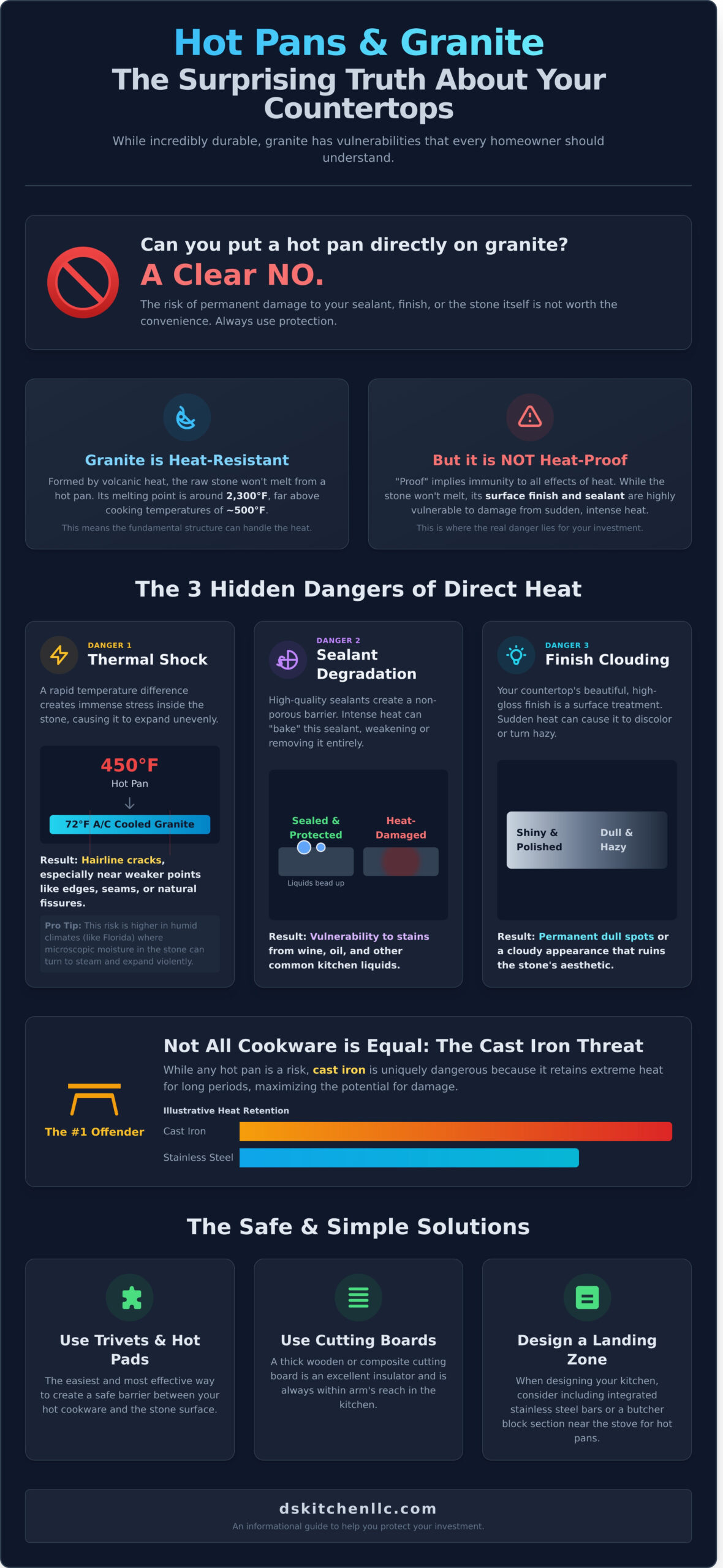
When considering the common question, can you put hot pans on granite, it helps to look at the science of the stone. Pure granite has a melting point of approximately 2,300°F. Given that most household cooking temperatures rarely exceed 500°F to 600°F, the raw stone is technically capable of surviving the heat of a searing steak or a boiling pot. However, in the world of professional kitchen design, we distinguish between a material being “heat resistant” and “heat proof.”
To better understand how this durability translates to your daily kitchen routine, watch this helpful video:
The Difference Between Stone Integrity and Surface Finish
While the internal structure of the rock is incredibly tough, your countertop is more than just raw stone; it is a finely crafted surface. At D&S Kitchen, our slabs are expertly polished and treated with high-quality sealants to ensure a flawless, non-porous finish. While the stone itself survives the heat, the surface treatments are more vulnerable. When asking can you put hot pans on granite, you must consider these factors:
- Finish Clouding: High-gloss finishes can “cloud” or become dull when exposed to sudden temperature spikes.
- Sealant Degradation: Intense heat can bake the protective sealer out of the stone, leaving it vulnerable to stains.
- Thermal Shock: Although rare, extreme temperature differentials can cause the stone to expand and contract rapidly, leading to hairline cracks.
Heat resistance is the ability of a material to withstand high temperatures without melting, not necessarily the ability to endure extreme heat without any aesthetic or surface damage.
The Invisible Dangers: Thermal Shock and Sealant Degradation
While granite is celebrated for its incredible durability, the question of can you put hot pans on granite involves more than just immediate surface damage. The primary threat is a phenomenon known as thermal shock. This occurs when the stone’s molecules expand rapidly upon contact with extreme heat, creating intense internal stress. This stress often manifests as hairline cracks, particularly near seams and edges-the most vulnerable points of any professional installation. Even if your countertop appears fine after a single hot pan placement, the damage is often cumulative and invisible to the naked eye.
According to the Natural Stone Institute, consistent protection is vital to maintaining the structural integrity of your stone. Relying on the misconception that a one-time placement is “safe” is a dangerous gamble that can lead to costly repairs later. At D&S Kitchen, we believe in providing service you can trust, which means helping you protect your investment from these hidden risks.
Why Thermal Shock Happens in Florida Kitchens
In our local climate, the temperature delta is often extreme. Placing a 450°F pan directly onto a slab cooled to 72°F by your air conditioning creates a violent expansion. Furthermore, the high humidity in Florida can cause microscopic moisture to become trapped within the stone’s pores. When heated rapidly, this moisture expands, leading to “fissure popping”-where natural weak points in the stone suddenly give way. This is why can you put hot pans on granite is a question with a cautious answer: the physics of the stone simply weren’t designed for such rapid shifts.
How Heat Destroys Your Countertop Sealant
Heat doesn’t just threaten the stone; it expertly destroys the protection we build into it. Most premium stone sealants are resin-based. High heat effectively “bakes” these sealants, causing them to discolor or “yellow” over time. Once the sealant is heat-compromised, your granite loses its vital stain resistance, leaving it vulnerable to permanent damage from oils and liquids.
- Discoloration: Heat can cause the resin in sealants to turn amber, ruining the look of light-colored granite.
- Porosity: A “baked” sealant leaves the stone’s pores open to bacteria and stains.
- The Water Drop Test: To check your sealant, place a few drops of water on the surface. If it doesn’t bead up within 10 minutes, your protection has likely been compromised by heat.
Our goal is to ensure your kitchen remains a stunning, functional space. By using trivets and pads, you ensure your premium materials stay in flawless condition for years to come.
A flawless kitchen serves as the perfect stage for creating memorable culinary experiences. For those special occasions that call for true luxury, sourcing from specialists like TSARINE Caviar can elevate your entertaining to the next level.
And for life’s most significant celebrations, such as an engagement, finding a lasting symbol of that moment is key. Local Tampa jewelers LC Rings specialize in creating beautiful, high-quality diamond rings perfect for marking such milestones.
Cast Iron vs. Stainless Steel: Does the Pan Type Matter?
When homeowners ask, can you put hot pans on granite, they often assume all cookware behaves the same. However, the material of your pot or pan significantly changes the risk profile for your countertops. While the natural composition and formation of granite allows it to withstand high temperatures, certain metals act as “heat batteries” that can push the stone past its limits.
The Cast Iron Crisis
Cast iron is far more dangerous to your stone than aluminum or stainless steel because of its incredible heat retention. While an aluminum pan loses heat rapidly once removed from the stove, cast iron undergoes a “heat soak” effect. It stores a massive amount of thermal energy and continues to transfer that heat into the granite for an extended period. This sustained energy transfer can cause deep-core stone stress, potentially leading to cracks.
Beyond the heat, the physical weight of cast iron poses a secondary threat. The rough, heavy underside of a skillet can easily scratch or dull the premium polish of your surface if it is slid across the counter. A heavy-duty trivet is mandatory for any cookware that holds heat for more than 60 seconds.
Small Appliances and Sustained Heat
It is a common mistake to think only stovetop pans are a concern. Small appliances like air fryer baskets, toaster ovens, and slow cookers create a “creeping heat” effect. Because these tools sit in one spot for hours, the sustained warmth can dry out professional sealants and eventually cause the stone to discolor or become more porous. To protect your investment, we recommend the following:
- Silicone Mats: Excellent for air fryers and quick-release pressure cookers.
- Heavy-Duty Trivets: Best for cast iron and large stockpots.
- Wooden Cutting Boards: A perfect temporary barrier for slow cookers to prevent heat from reaching the stone.
Understanding how different materials interact with your surfaces is key to a long-lasting kitchen. For more professional maintenance tips and guides on keeping your stone flawless, explore the D&S Kitchen blog. Remember, while you technically can you put hot pans on granite in an emergency, using a barrier is the only way to ensure your countertops remain stunning for decades.
What to Do If You’ve Already Put a Hot Pan on Granite
Accidents happen in a busy kitchen. While many homeowners wonder can you put hot pans on granite safely, discovering a dark ring, a dull spot, or a hairline crack after a meal is a stressful moment. Before you worry about a full renovation, it is important to identify the type of damage you are facing.
- Clouding: A milky white haze usually indicates the topical sealant has “cooked” or delaminated from the stone.
- Etching: A dull spot where the finish looks “eaten away,” often caused when heat reacts with acidic residues.
- Cracking: Visible lines or “spiderwebbing” caused by thermal shock, where the stone expanded too quickly.
Dealing with heat damage on specialized surfaces often requires expert knowledge. This principle applies whether it’s a modern countertop or a traditional heating feature. For example, the artisans at HrejiciKrby kamnářství kominictví are experts in repairing tiled stoves and fireplaces, which are designed to handle constant, extreme thermal stress. The lesson is universal: when you suspect structural damage from heat, it’s best to call a specialist.
For minor sealant dullness, a temporary DIY fix involves using a stone-safe polishing cream and applying a fresh coat of premium sealer. However, if the stone itself is compromised, professional intervention is the only way to ensure a flawless restoration.
Step-by-Step Damage Assessment
To determine the severity of the heat exposure, follow this diagnostic checklist to see if your can you put hot pans on granite experiment resulted in lasting harm:
- Step 1: Clean the area thoroughly with a pH-neutral, stone-safe cleaner. This removes grease or carbon buildup that might look like a permanent stain.
- Step 2: Use a flashlight at a low, grazing angle across the surface. This “raking light” will reveal hairline fissures or spiderwebbing that are invisible under standard overhead lighting.
- Step 3: Feel for texture changes. Run your fingertips across the spot; if the surface feels rough, pitted, or “thirsty,” the factory polish has been compromised.
When to Call D&S Kitchen for Professional Help
While granite is incredibly durable, some damage reaches the “point of no return.” Deep structural cracks require professional resin injection and expert color matching to prevent the fissure from spreading. Our team specializes in professional buffing and re-sealing to restore that expertly polished look to your premium surfaces.
In severe cases where thermal shock has compromised the slab’s integrity or caused a large chunk to spall, a partial countertop replacement may be the safest and most aesthetic solution. At D&S Kitchen, our service is built around you, ensuring your kitchen remains a stunning and functional centerpiece of your home. If your stone no longer looks its best, we are here to provide a service you can trust.
Designing a Heat-Safe Kitchen: The D&S Kitchen Approach
While the technical answer to can you put hot pans on granite involves understanding the physics of thermal shock, the practical solution begins with how your kitchen is designed and installed. At D&S Kitchen, our “Built Around You” philosophy ensures that we select materials and layouts that match your specific cooking habits. For Florida homeowners, granite remains the gold standard because of its incredible durability and ability to withstand the demands of a high-traffic kitchen when handled with expert care.
Expert Installation and Material Selection
A flawless installation is your first line of defense against countertop damage. Our team expertly selects premium slabs with fewer natural fissures, which significantly minimizes the risk of cracking due to temperature shifts. We also focus on strategic seam placement and robust sub-countertop support to ensure the stone can handle both weight and heat without stress. When you are ready to transform your space with a seasoned craftsman, contact us for a free estimate on your next remodel.
- Slab Inspection: We identify high-quality stone with structural integrity.
- Precision Support: Proper bracing prevents pressure points that lead to heat-related cracks.
- Strategic Layouts: We design your kitchen to keep vulnerable seams away from high-heat zones.
Living with Your Granite: Long-term Care
To enjoy a lifetime of beauty, we encourage our clients to follow the “Trivet Rule.” Even though granite is heat-resistant, premium materials deserve premium care. Using a trivet or hot pad protects the professional sealant and preserves the stone’s stunning finish. When considering can you put hot pans on granite, remember that preventative care is the hallmark of a well-maintained home. We invite you to visit our Tampa showroom to see our durable granite options in person and find the perfect match for your style.
D&S Kitchen is more than just a provider of high-quality cabinets and countertops; we are your partner in your home’s transformation. By combining stunning materials with a customer-focused approach, we ensure your new kitchen is built to last for years to come. Visit dskitchenllc.com to explore our gallery of real results from real Florida homes.
Protecting Your Investment: The Final Word on Granite and Heat
Granite is a stunning, volcano-born stone that offers incredible durability for any Tampa kitchen. However, while it is naturally heat-resistant, it is not invincible. To avoid the risks of thermal shock or damaging your protective sealant, it is always best practice to use trivets or hot pads. When asking yourself, can you put hot pans on granite, remember that a small precaution today prevents costly repairs tomorrow and keeps your surfaces looking brand new.
At D&S Kitchen, we believe your home deserves a space that is both functional and flawless. With over 10 years of expert service in the Tampa Bay area, we specialize in the installation of premium granite, quartz, and marble tailored to your lifestyle. We invite you to visit our local Tampa showroom to see real results from real Florida homes and discover how we can elevate your kitchen with a design that is truly built around you.
Ready to upgrade to premium granite? Schedule your free estimate with D&S Kitchen today!
Your dream kitchen is within reach, and our team is here to help you protect and enjoy your investment for many years to come.
Frequently Asked Questions
Can putting a hot pan on granite cause it to explode?
While granite is incredibly durable, placing a scorching pan on a cold surface can cause “thermal shock.” It won’t literally explode like a firework, but the internal stress can lead to a sudden, loud crack or a deep fissure. To protect your premium investment, we always recommend using a trivet rather than testing the limits of the stone’s natural resilience.
Will a hot pan leave a permanent white mark on my granite?
Granite itself won’t turn white, but the high-quality sealant used to protect your counters might. Intense heat can cause the sealer to “cloud” or delaminate, leaving a hazy white ring that is difficult to remove. If you’re wondering, can you put hot pans on granite without leaving a mark, the answer is that the stone survives, but the finish may suffer.
Is quartz more heat resistant than granite?
Granite is significantly more heat-resistant than quartz. While granite is a natural volcanic stone formed under extreme heat, quartz is an engineered product containing resins and polymers. These resins can melt or discolor at temperatures as low as 300°F. For a high-performance kitchen where heat is a constant factor, granite remains the superior choice for durability and thermal stability.
How long can I safely leave a hot pot on the counter?
You should avoid leaving a hot pot on the counter for more than a few seconds. Even though granite is a premium material, prolonged exposure to heat leads to localized expansion. This creates internal tension between the hot and cold areas of the slab, which can result in a hairline fracture. To ensure a flawless look for years, it is always safer to use a heat pad.
Can I use a cutting board as a trivet for hot pans?
It depends entirely on the material. A thick wooden cutting board serves as an excellent temporary trivet because wood is a natural insulator. However, never use a plastic or acrylic board; the heat from the pan will melt the plastic onto your stunning granite surface, creating a mess that is incredibly difficult to clean without damaging the stone’s expertly polished finish.
What happens if I put a hot pan near a seam in the granite?
Placing heat near a seam is one of the riskiest things you can do to your countertops. The adhesives and epoxies used to join the slabs are not heat-proof. High temperatures can cause the epoxy to soften, discolor, or fail entirely. To maintain the integrity of your install, keep hot cookware at least six inches away from any visible seams or joints.
Does the color of the granite (dark vs. light) affect heat resistance?
Darker granites, such as Absolute Black, tend to be denser and will absorb and retain heat much longer than lighter-colored stones. While the heat resistance is technically similar across all varieties, the thermal expansion in denser, dark stones can be more intense. Regardless of the color, a personalized approach to care ensures your stone stays beautiful and functional for decades.
Can I put a hot cookie sheet on granite?
A hot cookie sheet carries less thermal mass than a heavy cast iron skillet, but it still poses a risk to the sealant. If you are asking can you put hot pans on granite like a baking sheet, the risk of a structural crack is lower, but you still risk clouding the finish. For the best results, use a cooling rack to protect your stone.