
Last Tuesday, a homeowner in Orlando watched a full glass of red wine tip over onto her brand new Calacatta quartz. That split second of panic is something 85% of new homeowners experience when they first see a potential stain on their premium surfaces. You likely chose this material because it’s stunning and durable, yet you might still feel unsure about how to care for quartz countertops without accidentally etching the finish. We understand that your kitchen is an investment built around you, and you want to protect that beauty for the next 30 years.
The good news is that maintaining a flawless surface is simpler than most people think. We’ve spent over 10 years perfecting the maintenance routines that keep these stones looking brand new. This guide provides a simple daily cleaning routine and the confidence to choose safe products every time. You’ll also learn the expert secrets for handling stubborn ink or wine spills without a hint of panic. We’re here to help you master the small habits that ensure your home stays breathtaking for decades to come.
Key Takeaways
- Learn why quartz’s non-porous surface never requires sealing and discover the simple daily routine for how to care for quartz countertops to keep them looking flawless.
- Master the “gold standard” cleaning method and the specific tools you need to maintain a stunning, streak-free shine every day.
- Protect your investment by identifying the common household chemicals and heat risks that can cause permanent damage to your premium surfaces.
- Discover expert secrets for safely removing stubborn stains, adhesives, and ink without compromising the stone’s resin finish.
- Find out how professional installation and strategic seam placement create a durable kitchen space that is truly built around you and easy to maintain.
Understanding Quartz: Why Maintenance Differs from Natural Stone
Quartz isn’t a single slab of rock pulled directly from a quarry. Instead, it is a high performance Engineered Stone. This distinction is vital for every homeowner to grasp. While granite is 100% natural stone, premium quartz surfaces consist of 90% to 93% crushed natural quartz minerals mixed with 7% to 10% polymer resins and pigments. This specific ratio creates a surface that is incredibly dense and uniform. Because it’s a manufactured product, you don’t have to worry about the unpredictable structural weak points or large fissures often found in marble or granite slabs.
The biggest advantage of this engineering process is that quartz is non-porous. Natural stones have microscopic pores and channels that can swallow liquids, leading to deep internal stains. Quartz doesn’t have these “breathing” holes. Consequently, you never need to apply a chemical sealer to a quartz surface. This makes the initial steps of learning how to care for quartz countertops much simpler than managing natural stone. You’re working with a surface that’s built to resist moisture from the moment it’s installed in your home.
To better understand this concept, watch this helpful video:
The Science of Quartz Longevity
The resin binder is what gives quartz its incredible strength, but it’s also the component that dictates your cleaning habits. While the mineral content is heat resistant, the resins can melt or discolor if they’re exposed to temperatures exceeding 300 degrees Fahrenheit. In Florida, we face unique environmental factors. High humidity levels near 90% don’t affect quartz, but intense UV rays from large kitchen windows can. Over a period of 5 to 10 years, direct sunlight can cause the resins in certain quartz colors to slightly yellow or fade. Understanding how to care for quartz countertops involves protecting that resin bond from extreme heat and light to ensure your kitchen stays stunning for decades.
Quartz vs. Granite: Care Requirements Compared
For busy Tampa families, the choice between quartz and granite often comes down to the “Saturday Morning Test.” Granite requires a commitment to an annual sealing schedule; if you miss that 12 month window, your stone is vulnerable to wine or oil stains. Quartz removes that chore from your calendar entirely. However, there is a trade-off. While quartz won’t etch when it touches lemon juice or vinegar like marble does, it’s more sensitive to harsh chemicals. High-pH cleaners or bleach can dull the factory finish of the resin.
- Granite Maintenance: Daily wiping with stone soap plus annual chemical sealing.
- Quartz Maintenance: Daily wiping with mild dish soap; no sealing ever required.
- Stain Resistance: Quartz wins on liquid absorption; Granite wins on chemical solvent resistance.
At D&S Kitchen, we believe in providing service you can trust by helping you choose materials that fit your lifestyle. Quartz is designed to be a “set it and forget it” solution for homeowners who want premium aesthetics without the high-maintenance rituals of natural stone. It’s a durable, functional choice that is truly built around you.
The Daily Cleaning Routine for Flawless Surfaces
Your daily routine determines the lifespan of your kitchen. We’ve seen hundreds of installations over our 10 years of service, and the most successful homeowners stick to simplicity. The absolute gold standard for how to care for quartz countertops involves nothing more than warm water and a drop of mild dish soap. This method is effective because quartz is non-porous. Unlike granite, it doesn’t absorb liquids, so you don’t need aggressive scrubbing to lift dirt or oils from the surface.
Choosing your tools is the next step in maintaining a flawless surface. Throw away those yellow and green abrasive sponges. The green side is often made of aluminum oxide or silica, which can microscopically scratch the resin. Instead, use high-density microfiber cloths. These cloths trap 99% of bacteria and debris without harming the polish. If you encounter a stubborn dried spill, let a wet cloth sit on the spot for 5 minutes rather than reaching for a metal scraper. This softens the debris naturally.
Having the right tools on hand makes daily maintenance much simpler. For a wide selection of home and kitchen products that can help protect your investment, you can learn more about SUZANA SHOP.
Never underestimate the power of drying. Water in Florida contains high concentrations of calcium and magnesium. When water evaporates on its own, it leaves these minerals behind. This creates a hazy, “cloudy” appearance that ruins the look of a premium install. Using a fresh, dry towel to buff the surface after cleaning takes less than 60 seconds but keeps the stone looking brand new. If you’re planning a renovation, our team can show you how different finishes react to daily use when you view our stone gallery.
Safe Cleaning Agents You Already Own
Quartz is a manufactured stone typically composed of 93% natural quartz and 7% resin binders. These resins are sensitive to high pH levels. Stick to soaps with a pH between 6 and 8. You can easily mix a custom cleaning solution by combining 16 ounces of water with a half teaspoon of clear dish soap in a spray bottle. Avoid common “natural” remedies like vinegar or lemon juice. These acidic liquids can break down the bond between the quartz and the resin over time. According to the Quartz Care Guide from MSI, industry experts agree that pH-neutral cleaners are the only way to prevent permanent surface dulling. Learning how to care for quartz countertops properly ensures your kitchen remains the centerpiece of your home.
Dealing with Hard Water in Florida Kitchens
Tampa area homes often deal with water hardness levels exceeding 12 grains per gallon. This leads to rapid mineral buildup, especially around faucet bases. You’ll see white rings or a chalky texture within just 14 days of a new installation if you aren’t careful. To remove this scale, use a damp cloth and a cleaner specifically labeled for stone. Avoid using steel wool or metal putty knives; these will leave permanent silver marks on the quartz. A simple 10-inch squeegee kept under the sink is your best defense. Use it to wipe the area around the sink after every use. This small habit prevents 90% of hard water issues before they require professional attention.
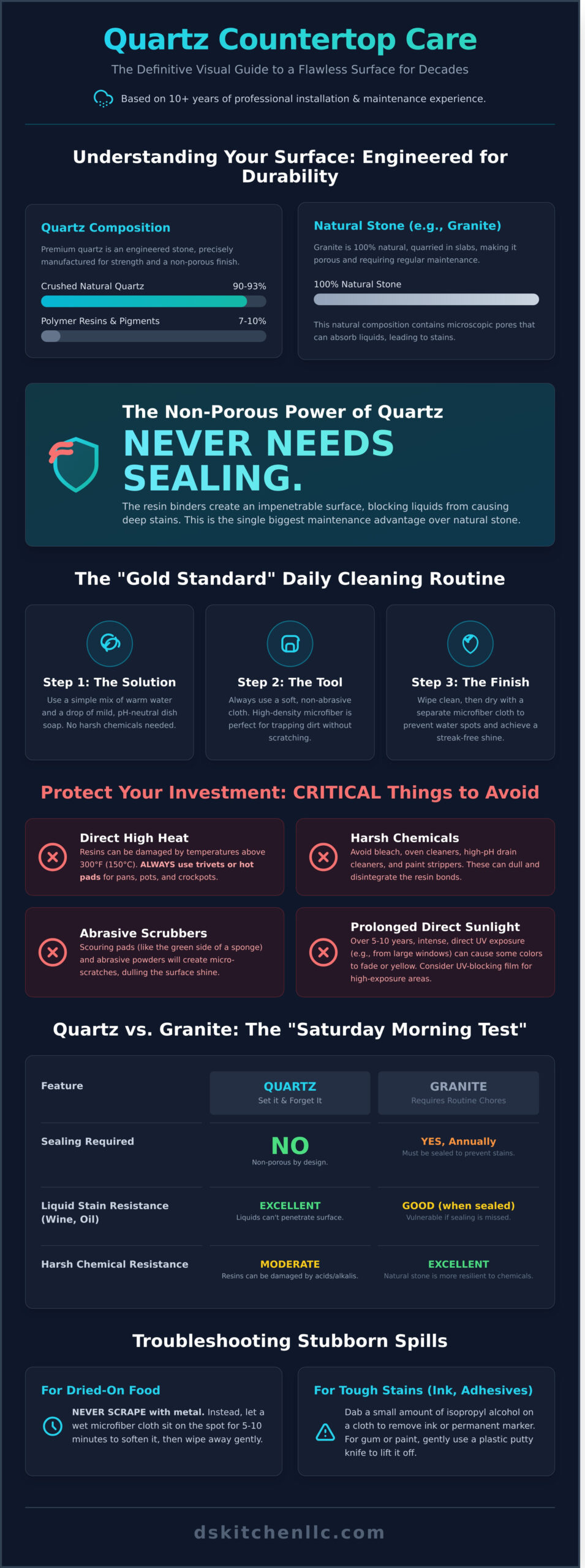
What to Avoid: Protecting Your Quartz from Permanent Damage
You chose quartz for its stunning look and legendary durability. While it’s one of the toughest materials we install at D&S Kitchen, it isn’t indestructible. Learning how to care for quartz countertops means knowing exactly what can compromise the factory finish. Most permanent damage occurs within the first 18 months of installation due to simple maintenance mistakes. By avoiding a few specific habits, you can keep your premium surfaces looking flawless for decades.
Thermal Shock and Resin Scorching
Quartz is an engineered product typically composed of 93 percent natural stone and 7 percent polymer resin. This resin acts as the binder, but it has a specific weakness: heat. Most quartz resins begin to soften or discolor at temperatures exceeding 300°F. If you place a pot straight from a 425°F oven onto the surface, you risk a permanent yellow or brown “burn mark.” These marks aren’t stains on the surface; they represent a chemical change in the resin itself that is usually impossible to reverse.
- Always use a trivet with rubber feet for air fryers and crockpots.
- Slow cookers can reach 200°F and maintain that heat for 10 hours, which can lead to “thermal shock” cracks in the slab.
- Never place hot cookie sheets or cast iron pans directly on the stone.
The Dangerous Chemical List
High-pH cleaners are the fastest way to ruin your premium finish. You should avoid any product with a pH level above 10 or below 5. This includes bleach, oven cleaners, and heavy-duty degreasers. These chemicals break down the bond between the quartz crystals and the resin, leading to a dull, etched appearance. Even though the stone is non-porous, harsh chemicals can create a permanent “cloudy” look that ruins the aesthetic of your kitchen.
- Acetone: Often found in nail polish remover, this solvent can dissolve the resin binders on contact.
- Multi-surface sprays: Approximately 40 percent of common grocery store cleaners contain citric acid or ammonia, which dulls the polish over time.
- Spot Testing: Always apply a new cleaner to a 1-inch hidden area, such as under a cabinet overhang, before using it on the main island.
Mechanical damage is another concern that homeowners often overlook. Quartz rates a 7 on the Mohs hardness scale, which is harder than most stainless steel knives. However, using your countertop as a cutting board will eventually leave microscopic scratches. These tiny grooves trap food particles and oils, making the surface harder to sanitize. Using a dedicated wood or plastic board protects your investment and keeps your knife blades sharp.
Finally, be wary of “Stone Polish” or “Glow” products designed for granite or marble. These formulas often contain waxes or oils meant to penetrate porous natural stone. Since quartz is non-porous, these products have nowhere to go. They sit on top of the slab and create a greasy, streaky film. Removing this buildup often requires professional-grade cleaners. Sticking to a simple routine of pH-neutral soap and water is the most effective way how to care for quartz countertops without risking a hazy finish. We build our kitchens to last, and avoiding these common pitfalls ensures your space remains a high quality centerpiece of your home.
Troubleshooting: How to Remove Stubborn Stains and Spills
Life moves fast in a busy kitchen. Even with the best intentions, spills happen and residues build up. Learning how to care for quartz countertops means knowing exactly how to react when a standard wipe-down isn’t enough. While your surfaces are engineered for maximum durability, they aren’t completely indestructible. You need a specific toolkit to handle the unexpected without damaging the factory finish.
The 10-minute rule is your first line of defense against permanent discoloration. Quartz is composed of roughly 93% natural stone and 7% polyester resin. While the stone is non-porous, that resin binder can react with high-pigment liquids like espresso, red wine, or balsamic vinegar if they sit for more than 600 seconds. If you miss that window and a shadow remains, don’t reach for bleach. Bleach can cause a permanent chemical burn on the resin, leading to a dull, white spot that’s impossible to buff out.
For sticky situations involving adhesive, candle wax, or gum, the “Goo Gone” trick is a lifesaver. Apply a nickel-sized amount of the solution to the residue and let it sit for exactly 120 seconds. This breaks down the chemical bond of the adhesive. Wipe it away with a clean microfiber cloth and follow up immediately with a damp, soapy rag to remove any oily film. This method works 100% of the time for price tag stickers or leftover tape from holiday decorations.
Ink and dye require a different approach. If a permanent marker or a drop of hair dye hits the surface, 70% isopropyl alcohol is your best tool. Moisten a cotton ball and rub the spot using small, circular motions. The alcohol dissolves the pigment without softening the resin binders. Most ink stains lift in under 45 seconds using this professional technique. It’s much safer than using abrasive scouring pads which leave visible scratches.
Dried food like hardened oatmeal or egg yolks can be tricky. Never use a metal knife or a screwdriver to pry these off. Instead, spend $4 on a plastic putty knife. Hold the tool at a 45-degree angle and apply firm, steady pressure to pop the debris off the surface. This mechanical removal is safer than using harsh chemicals and protects the integrity of your stone.
The Deep Cleaning Protocol
Once every 30 days, your counters deserve a reset. Over time, dish soap can leave a microscopic film that dulls the shine. Use an ammonia-free glass cleaner to strip away this buildup. Spray the surface liberally and wipe with a fresh microfiber towel until dry. This simple monthly habit maintains that “showroom” reflection for years. If you notice significant dulling after 5 to 10 years of heavy use, contact us for a professional surface restoration to bring back the original luster.
Emergency Stain Removal
Organic stains from turmeric, beet juice, or blueberries are common in Florida kitchens. A baking soda paste is the safest remedy. Mix 3 parts baking soda with 1 part water to create a thick consistency. Apply it to the stain and let it sit for 15 minutes. This provides a very mild abrasive action that’s safe for quartz. For “water rings” that appear after a party, don’t worry. These are usually just surface minerals from hard water. A 50/50 mix of white vinegar and distilled water removes these deposits 98% of the time.
Long-Term Care and the D&S Kitchen Difference
Your journey with premium stone doesn’t end the moment the installers leave your home. Understanding how to care for quartz countertops involves realizing that long-term durability is a product of both daily habits and the quality of the initial installation. At D&S Kitchen, we’ve spent over 10 years perfecting an installation process that minimizes the stress points where cracks or chips typically occur. By visiting our Tampa showroom, you can see firsthand how we prioritize structural integrity. We ensure every slab is perfectly level within a 1/8 inch tolerance across the entire surface, which prevents the uneven weight distribution that often leads to structural failure in lesser installs.
Proper seam placement is a critical factor in making your daily cleaning routine easier. Many installers place seams in high-traffic areas or near sinks to save on material costs. We take a different approach. Our team strategically places seams away from moisture-heavy zones and heat sources. This prevents water from infiltrating the seam adhesive, a common issue that causes 75% of seam discolorations over a five-year period. When seams are tight and correctly placed, a quick wipe with a damp cloth is all you need to maintain a hygienic surface.
Minor mishaps are a part of life in a busy kitchen. If a heavy cast-iron skillet hits the edge of your counter, you might see a small chip. Most chips are less than 5mm in size and are purely cosmetic. You can handle these by using a color-matched acrylic or epoxy resin kit. This process fills the void and seals the stone against bacteria. If the chip is on a complex edge profile like an Ogee or Waterfall, professional buffing ensures the repair is invisible to the naked eye. Once your counters are pristine, you can begin looking at the next phase of your renovation, such as integrated sinks or high-end finishes that complement your stone.
Professional Maintenance and Repairs
Identifying when a chip requires professional intervention is simple. If you can feel a sharp edge or see the white, unpolished interior of the stone, it’s time for a resin fill repair. These repairs typically take less than 60 minutes but provide a permanent bond that prevents the chip from expanding. The longevity of these repairs often depends on the stability of your base. We use high-quality custom cabinets to provide a rigid foundation. Since quartz weighs approximately 20 to 25 pounds per square foot, a sturdy cabinet box is essential to prevent the shifting that causes seams to pop. For personalized advice on specific stone brands, stop by our Tampa showroom to speak with our staff about specialized cleaning products.
Your Partner in Florida Home Remodeling
D&S Kitchen selects quartz slabs that specifically meet the needs of Florida homeowners. We choose materials with a 93% natural quartz content to ensure they stand up to the high humidity levels found in local coastal environments. Our “Built Around You” philosophy means we don’t just sell you a slab; we design a low-maintenance environment tailored to your lifestyle. This includes selecting edge profiles that are less prone to chipping and finishes that hide fingerprints. We’ve helped over 1,500 homeowners transform their spaces since 2012. If you’re ready to upgrade your home with a surface that’s as easy to maintain as it is beautiful, request a free estimate for your next project today.
Keep Your Kitchen Stunning with Lasting Quartz Care
Maintaining a flawless kitchen doesn’t have to be a chore. By sticking to a simple daily routine and avoiding harsh chemicals, you protect the structural integrity of your stone. Understanding how to care for quartz countertops is the best way to preserve that premium shine for decades. Whether you’re wiping down daily spills or tackling a rare stubborn stain, these small steps keep your surfaces beautiful. It’s about consistency and using the right tools for the job.
D&S Kitchen brings over 10 years of Florida remodeling expertise to every home. We source premium quartz from top-tier stone warehouses to guarantee quality. Our A+ rated local craftsmanship in Tampa is built around you, ensuring a seamless transition to a stunning new reality. We’re here to make your vision real with materials that are both functional and breathtaking. We’ve spent a decade perfecting our process so you can enjoy a worry-free renovation.
Ready to upgrade to a low-maintenance kitchen? Contact D&S Kitchen today for a free estimate!
Your dream kitchen is closer than you think, and we’re excited to help you build it.
Frequently Asked Questions
Can I use Windex on quartz countertops?
You should avoid using Windex on your quartz surfaces because its high pH level and ammonia content can degrade the resin binders over time. While a single spray won’t cause immediate visible harm, 12 months of consistent use often leads to a dull, cloudy appearance. Instead, stick to a simple mixture of warm water and a drop of pH-neutral dish soap for a flawless finish that lasts.
Do quartz countertops stain easily from red wine or coffee?
Quartz countertops are highly resistant to staining because they’re engineered with 93% crushed natural stone and 7% resin. This non-porous surface prevents liquids like red wine or coffee from seeping in, unlike natural marble. However, you should still wipe up spills within 30 minutes. If a spill sits for 24 hours, it can leave a surface mark that requires a specialized stone cleaner to remove safely.
Is it okay to put a hot pizza box directly on quartz?
It’s generally safe to place a hot pizza box directly on your quartz, as most delivery boxes don’t exceed 145 degrees Fahrenheit. Quartz can typically withstand temperatures up to 300 degrees Fahrenheit before the resin binders begin to scorch. To keep your kitchen looking premium, we recommend using a trivet for any items coming straight from a 400 degree oven. This prevents thermal shock and protects your investment.
How do I get the shine back on my quartz countertops?
You can restore the luster of your surface by using a dedicated quartz polish or a 50/50 mix of water and isopropyl alcohol. Learning how to care for quartz countertops involves avoiding abrasive scrubs that cause micro-scratches. Over 95% of dullness issues stem from soap film buildup. A quick buff with a microfiber cloth after cleaning will instantly reveal that stunning, factory-fresh shine that’s built just for you.
Can I use a Magic Eraser on quartz?
You shouldn’t use a Magic Eraser on quartz because it’s effectively a 3,000 to 5,000 grit sandpaper. This abrasive material can strip the factory polish and leave a permanent dull spot on your kitchen island or vanity. For 99% of tough marks, a soft cloth and a non-abrasive cream cleanser are much safer options. These methods protect the integrity of your stone while ensuring your surfaces remain beautiful for years.
What happens if I use bleach on my quartz surface?
Using bleach on quartz can cause permanent discoloration and chemical burns on the engineered surface. Bleach has a high pH level of 12 or 13, which reacts poorly with the resins holding the stone together. If you accidentally spill bleach, you must rinse it with clean water within 60 seconds to prevent a yellowing effect. We want your home to stay beautiful, so stick to gentle, pH-neutral cleaners for daily maintenance.
Do I ever need to seal my quartz countertops?
You never need to seal your quartz countertops because they’re already non-porous by design. Unlike granite, which requires sealing every 12 to 24 months, quartz is factory-engineered to be maintenance-free. This is a major reason why 42% of homeowners now choose quartz for their kitchen renovations. Our team ensures a flawless install so you can enjoy your space without worrying about the cost or hassle of annual chemical treatments.
How do I remove hard water spots from my kitchen island?
To remove hard water spots from your kitchen island, apply a solution of one part white vinegar to one part water. Let it sit for no more than 60 seconds before wiping it away with a damp cloth. This is a key step in how to care for quartz countertops in regions with high mineral content in the water. For stubborn 2 millimeter thick deposits, use a plastic scraper to gently lift the lime scale.